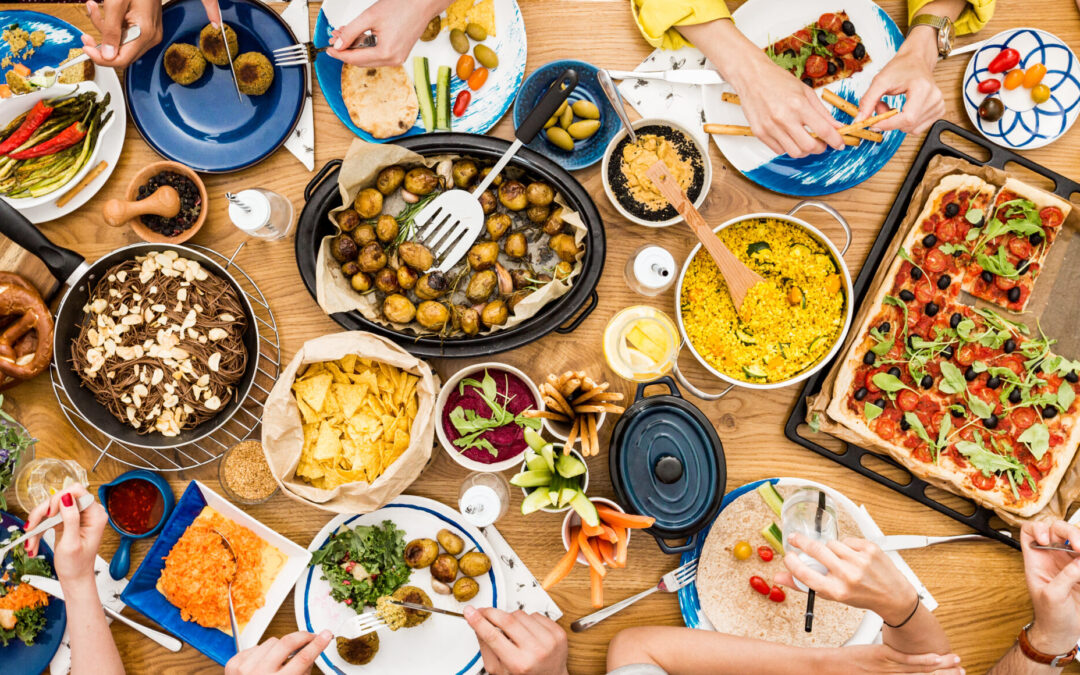
The Importance of Community When Going Plant-based or Vegan

The Importance of Community When Going Plant-based or Vegan

It is normal not to want rock the boat in our social circles. Evolution shows that for survival reasons we experience safety when we stay in our community. 

Even when we want to do something that we believe in, if it goes against social norms, we often don’t do it. 

We don’t want to feel alone. 

Or like an outsider. 

This applies to going plant-based or vegan too. 

For whatever our reasons, we are ready for the benefits of eating plant-based. 

  • We’ve heard about the health benefits. 
  • It breaks our heart that we eat animals (and we usually don’t think about it so that we can eat like we normally do.)  
  • And we are now aware of the negative impacts of meat consumption on our planet.

Yet, no one else we know is plant based. Our family certainly isn’t, and we can’t imagine what we would feed them if we ate plant-based. Or maybe we’ve tried it once before and it didn’t stick.

How can we possibly make the leap? Sure, we could find a few meals here and there, but every day? And what about gatherings with friends and families? Will we feel ostracized?

Or maybe our friends will be supportive and go out of their way for their “one vegan friend” and then be resentful. Or, gasp, maybe even talk about us behind our back. 

It’s easier, at least for social reasons, not to bother. 

But we are not Neanderthals anymore. For certain choices, like choosing to eat plant-based or go vegan, we aren’t going to be cast out of society. In fact, it is not only becoming more widely accepted, but there’s a whole vegan community waiting to embrace us with open arms.

When I was still vegetarian (or maybe even pescatarian, I can’t remember), I joined Vegan Toastmasters. It was (and still is) nice to be surrounded by people who share my values. Additionally, there are vegan meetups, and tons of Facebook groups to join.

My favorites are: Plant-based Lifestyle with Sherri Goodman Graham for healthy plant-based eating and the polar opposite Fata** Vegans are Awesome which is a vegan food porn page. It’s just a lot of fun watching people discover vegan foods that are fun to eat. There’s nothing healthy about that page, but people aren’t eating animals and it’s hilarious.

Dinner with some of my Vegan Toastmasters friends.

Oh, and of course, we have our own Facebook group at What’s Plant-Based Cooking Good Looking?.

I follow a few interesting Instagram accounts too and a bunch of animal sanctuaries like Rowdy Girl, Animal Place, Odd Man Inn, and others. I love watching farm animals live their best lives and supporting the amazing people that care for them. 

And the longer I’m vegan, the more people I meet who are too. Plus, at this point, most of my friends and family are super supportive (even if they do whisper behind my back. I don’t care- I know I’m doing the right thing on every level. And what other people think of me is none of my business anyway).

Until you find your community, having even one person in your corner is helpful. As a coach, I help with the nuts and bolts of taking my clients step-by-step toward a plant-based lifestyle.  And I’m there to be an ally. If you are ready to take the next step and can use some support or more community, feel free to reach out.
Our Moral Obligations to Animals- in the New York Times

Our Moral Obligations to Animals- in the New York Times

Nicholas Kristof is one of the leading New York Times columnists. If you read the NY Times, you are likely familiar with his work. We read his book A Path Appears in grad school. Kristof generally writes about politics and international affairs. He is amazingly talented and insightful.

Yet, he just published a piece called: The Truth About Your Bacon in the Times. It’s a huge departure from what we are used to from Kristof. The article exposes some of the horrors of the pig industry.

And I just realized that he has written three other articles about animal welfare and agriculture in the last few months. 

Why has Nicholas Kristof turned his attention to animal welfare? Here is his response to a comment that appeared under the online article: 

“I think that there is a broad reassessment of our moral obligations to the animals we eat. Evidence of that is a NY Times columnist writing not just about politics or international relations, but also about animal welfare — that would not have happened when I first joined the Times in 1984. So I see an arc of progress.” 

Yes! An arc of progress. Discussions about our moral obligations to animals are in our mainstream news. Nonetheless, our mainstream western diet still eclipses moral obligations. 

The ease of eating the way we’ve always eaten makes it too comfortable to make shifts. 

  • We are accustomed to grabbing meat and eggs at the supermarket. 
  • We are accustomed to familiar tastes and textures. 
  • We are accustomed to cooking meals we’ve always cooked. 
  • We are accustomed to celebrating with certain foods. 
  • We don’t wish to be the person in our social circle to be different. 
  • We believe that eating animals is health promoting, or possibly not a big deal.
  • There are way more options when dining out or traveling for meat eaters. 
  • We haven’t stopped to question our choices.

There are plenty more reasons, but these are just a few that I’ve noticed from my clients and people in my plant-based and vegan community. 

I understand this!

Morality around the treatment of animals was brought to my attention when I read Animal Liberation in college in the 80’s.  But I chose (not necessarily consciously but chose nonetheless) to continue eating animals despite an inner knowing that it was wrong. 

I can choose to feel guilty for all the years that I wasn’t following my inner compass, or I can offer myself some compassion. The same compassion that I offer people that I work with who are not yet vegan or plant-based. 

It just so happens that when we follow our moral obligations to animals (choosing plant-based), that we are potentially opting for a healthier lifestyle for ourselves. And this all contributes to a reduction in environmentally damaging animal agriculture as well. 

If you haven’t already, I encourage you to read the article. If you have questions or need support with next steps because you feel a tug at your heart to make a change, I am available. 

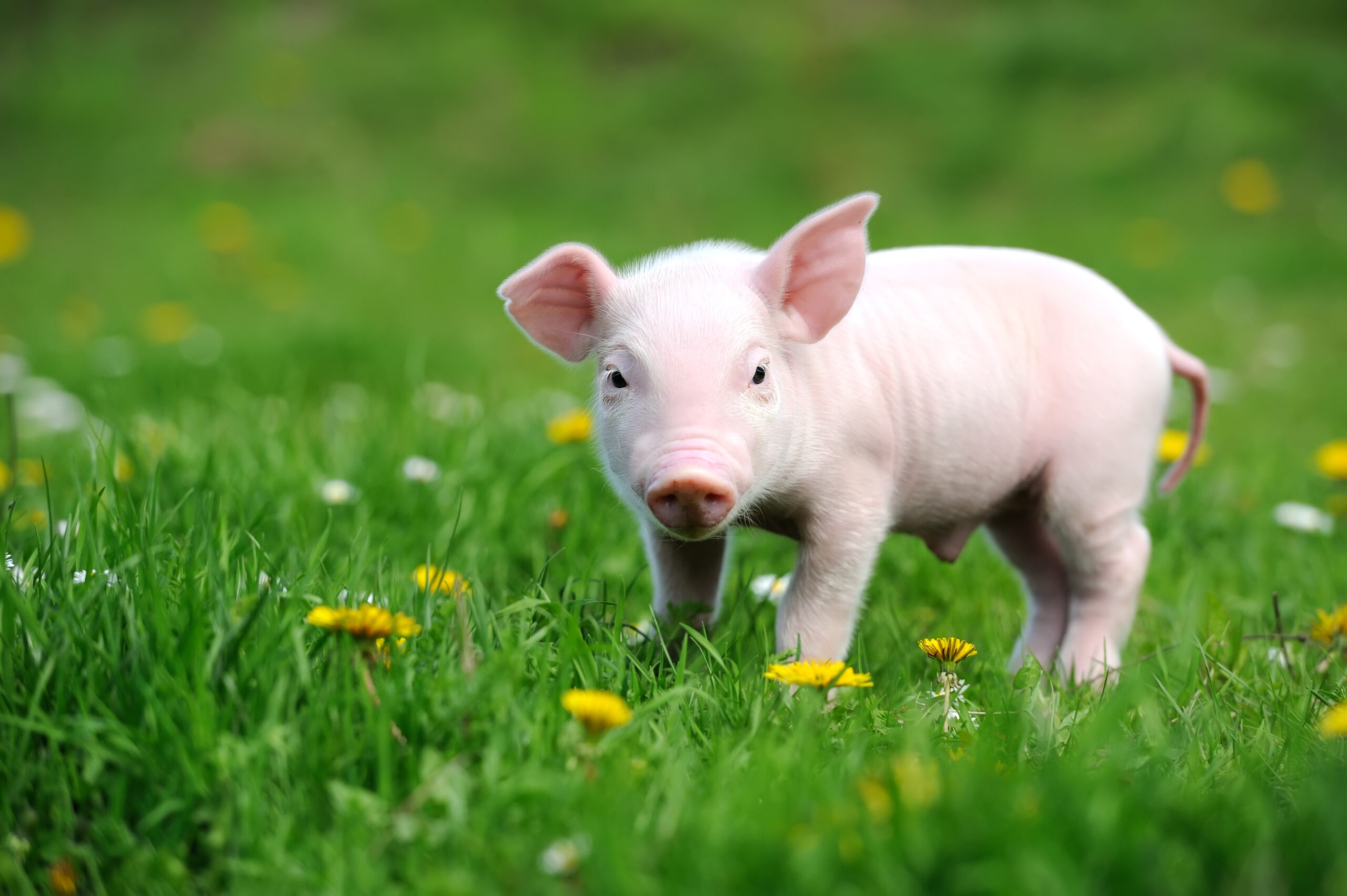
p.s. I wasn’t brave enough to use the NY Times image of the pig and her piglets in captivity. The image I shared at the top is how I envision our compassionate world. Pigs and other animals cared for and seen as the sentient individuals they are.

Food for Thought: Reducing Your Carbon Footprint with a Plant-Based Diet

Food for Thought: Reducing Your Carbon Footprint with a Plant-Based Diet

Twice this week I received notifications about how our broken food systems are feeding the climate crisis. 

The first was from my friend, Jyoti who shared this article from the NY Times. The title is:

Save the Planet, Put Down that Hamburger.

Researchers examined the diets of 55,500 people and found that vegans are responsible for 75 percent less in greenhouse gases than meat-eaters. 

Even if you aren’t quite ready to go fully vegan, dramatically reducing the amount of animal products you consume can make a difference, says the Oxford Study. 

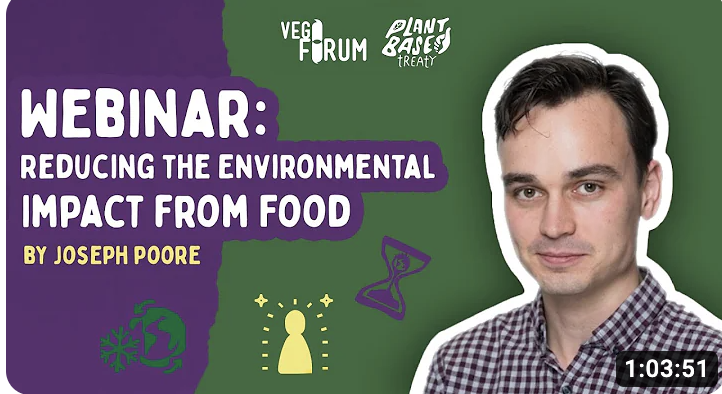
The second notification I received was from the people at The Plant-Based Treaty. Researcher, Dr. Joseph Poore, also from Oxford, did a beautiful job explaining all of this in a webinar titled: Reducing the Environmental Impact from Food. 

(Starting at 3:55 you’ll find an introduction from the Mayor of Stockholm. Dr. Poore begins at 7:00) 

Dr. Poore makes it all very easy to understand, and he included graphs and images (which The Plant-Based Treaty people are making available to anyone who is interested. Let me know if you want them and I can share.) Even if you only watch the first bit, you’ll get a sense of the power of his study. I learned a lot by watching the whole webinar. 

And I have quoted the book, The Carbon Almanac, foreward by Seth Godin, a few times. The book discusses many of the ways we can make a difference to the environment. Here are a few quotes about how animal agriculture does harm: 

  • Raising beef for consumption requires 15,415 liters of water per kg- nearly 48 times as much as the average amount needed to grow vegetables. p. 200
  • If everyone on the planet became a vegetarian, we could save an estimated $1.6 trillion in CO2 and health damages by the year 2050. If we all went vegan, that number could jump to nearly $1.8 trillion. p. 200
  • If all humans followed the diet of the United States, every hectare of the world’s habitable land would need to be converted to agriculture and we would still be 38 percent short of the land needed to feed everyone. p. 203
  • Livestock takes up nearly 80 percent of global agricultural land yet produces less than 20 percent of the world’s supply of calories. Alternatively, if everyone adopted the plant-based diets consumed across South Asia, Sub-Saharan African and some Latin American countries, the newly available landmass could feed the entire planet. p. 203
  • Milk is responsible for more greenhouse gas emissions than all airplanes combined. p. 207

And the following is from, Jonathan Safran Foer, the author of We Are the Weather: Saving the Planet Begins at Breakfast: 

  • The four highest-impact things an individual can do to tackle climate change are eat a plant-based diet, avoid air travel, live car-free and have fewer children. Of those four actions, only plant-based eating immediately addresses methane and nitrous oxide, the most urgently important greenhouse gases.
  • Changing how we eat will not be enough, on its own, to save the planet, but we cannot save the planet without changing how we eat.
  • Animal agriculture is responsible for 91 percent of the Amazonian deforestation.
  • About 80% of [total] deforestation occurs to clear land for crops for livestock and grazing.
  • According to the United Nations Framework Convention on Climate Change, if cows were a country, they would rank third in greenhouse gas emissions after China and the United States

Whether you go fully vegan for the animals, or plant-based for your health, or even reduce animal product consumption for the environment, you are making a difference. If you need help getting there, we have free recipes in our free Facebook group, we offer cooking classes and one on one coaching. 

Reach out and let us know how we can be helpful!

Let’s not look away. We are all responsible. Our children will have to live on this planet after we’re gone and it’s already getting scary. Let’s do what we can while we are here.

Addressing Top Concerns About Eating Plant-Based

Addressing Top Concerns About Eating Plant-Based

I recently posted a blog titled: 19 Reasons Why Shifting to Eating Plant-Based Might Feel Challenging. Fortunately, all of those concerns, while legitimate, can be alleviated. At some point I experienced these challenges, yet they are no longer an issue for me, or many other people.

One of the reasons why change is hard is that we are simply accustomed to eating animal products. Meat and dairy are served in most restaurant, they’re prominent in supermarkets and what our society considers “normal”. It’s what we grew up with and most of us didn’t question it then, and many of us don’t question it now.

Habits:

Habits are challenging to shift, but with a big enough “why” it’s much easier. Plus, when you become educated about the horrors of animal agriculture as well as the health detriments of eating the Standard American Diet, you’ll have more incentive to make changes. There are many recipes, bloggers, books, videos and classes to help you cook and eat more plant-based. There’s certainly no lack of support.

Scientific Evidence:

There’s no end to the information available about how to eat healthfully. And much of the advice is conflicting! Truthfully, it’s not one size fits all. But there is mounting scientific evidence that a plant-based diet is the healthiest. I’m not talking about eating processed vegan food. I’m talking about whole food plant-based eating. The China Study is a great place to start.  

Protein, Carbs and Weight Concerns:

Two of the biggest concerns are “where do vegans get their protein” and “since plant-based is high in carbs, I’m concerned I’ll gain weight”.

Let’s address protein. Every plant you eat contains protein. All plants have some protein in them, some of them have a lot of protein. That’s how they grew in the first place. Plants, like humans, need protein to grow. Here’s an article explaining about plant-based protein.  

And think about some of the largest land animals like horses, cows, giraffes, elephants and even gorillas. They are all herbivores.

As for the carbs… When we eat complex carbs (whole grains, legumes, sweet potatoes, brown rice, quinoa) we are getting nutrition that fuels our body and does not spike blood sugar like simple carbohydrates do. When we fill up on potato chips, baked goods made with white flour, white rice, we are eating processed “food” which is calorie-dense and devoid of nutrition. I eat whole grain foods, potatoes, brown rice, vegetables and fruits all day long and weight is not an issue. These nutrient-rich foods are also high in fiber.

“Fiber helps regulate the body’s sugar use, keeps hunger and blood sugar in check, and helps food move through the digestive system with regularity.”
— UCLA Heath April 22, 2021

Variety:

I remember worrying that I’d be stuck eating salads or pasta and plant-based foods would be boring. That would have been the case 20 years ago. But the industry has come such a long way, and there are endless amazing plant-based recipes and foods for us to enjoy.

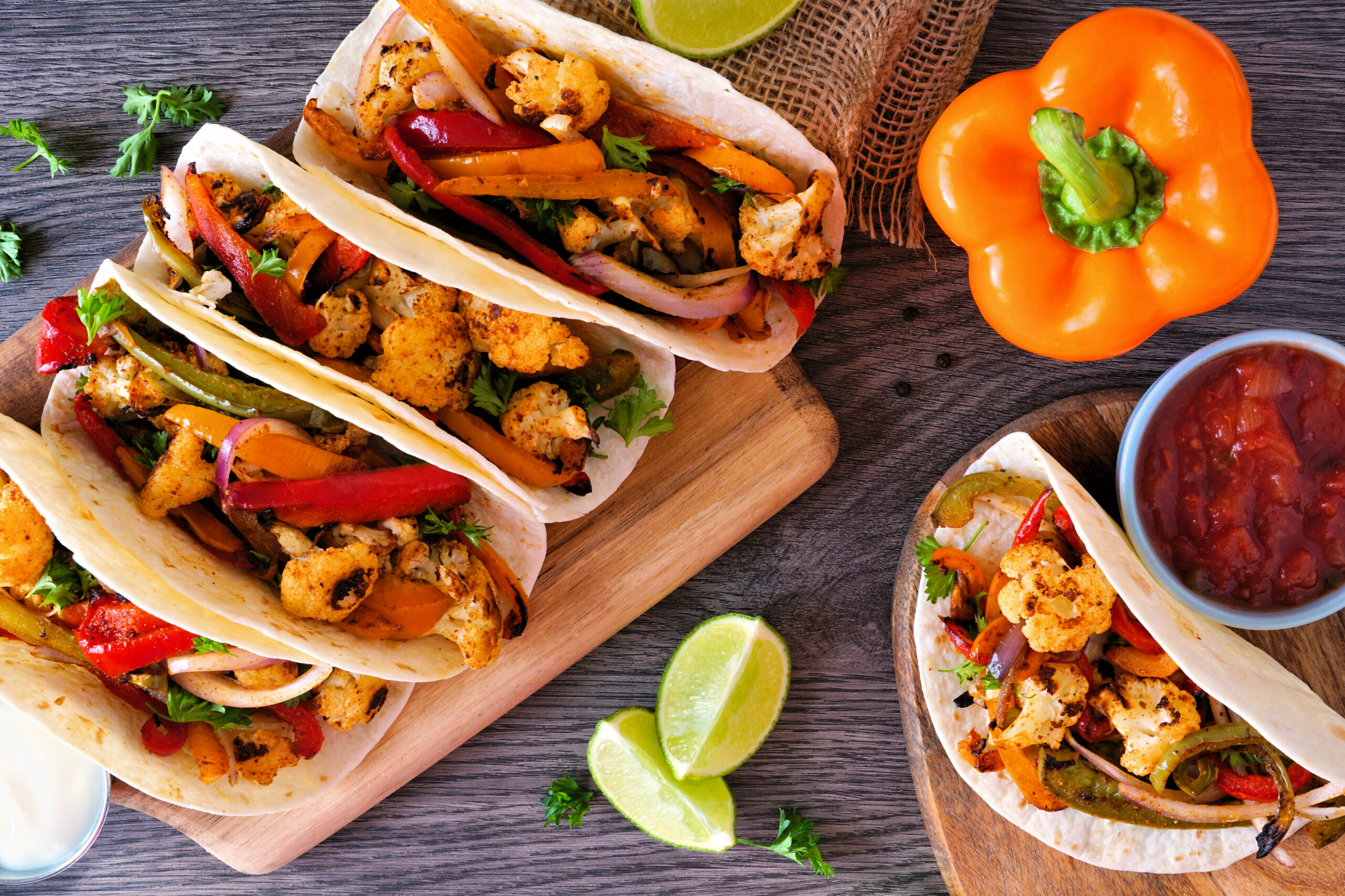
It has been a fun journey discovering the plant-based version of foods we’ve always enjoyed, like tofu teriyaki, lasagna, pasta Bolognese, veggie burgers and others. And we’ve discovered new recipes that my husband (who has the palate of an 8-year-old) loves. He NEVER ate fajitas or tacos until I recently made some and now it’s one of his favorite dinners. This is anything but boring! It has taken some trial and error, but we have loved most of the dishes I cook.

Setting Up For Success:

Before I knew how to cook anything plant-based, it was easier not to cook anything at all. Two factors changed that. 1- I took a cooking class and learned how. 2. Until I had cooked a few meals that we enjoyed, I didn’t have a repertoire. It didn’t feel easy or doable. And I was never armed with the right foods in the house either. So I would fall back on the less healthier options. Preparation is key. In the beginning it’s important to be conscious about which foods you are choosing for your fridge and pantry and which ones you plan on cooking. I am now coaching people to help them be prepared.

Cost:

Another concern I hear is that eating plant-based is more expensive. If you eat the fake meat versions of hamburgers regularly, it can get a bit pricey. Many of the processed foods that are meat substitutes are more expensive. They are great in a pinch or every once in a while.

But when you learn to cook plant-based meals, it is less expensive, and the healthier choice. 

Making it Easy:

There are so many shortcuts for preparing meals nowadays. Riced cauliflower, frozen vegetables, pre-chopped vegetables, super firm tofu that you don’t have to press and more.  I know it’s blasphemous to chefs, but I love my chopped garlic in a jar. It just makes it easier and I like easy! I always cook enough to have leftovers so we have lunch the next day. Or if I’m making a Bolognese, or veggie burgers, for example, I cook enough to have some in the freezer. I also make a few days’ worth of overnight oats at a time. There are tons of ways to save time in the kitchen (including investing in a few kitchen tools like a food processor).

And if you really won’t cook, there are many ways to prepare easy, satisfying and healthy meals. (Though I do recommend learning how to cook a few basics.) 

Social Elements:

Let’s look at the social aspect of eating plant-based. Yes, at first it might be hard to be the only person in your social circle making this choice. And you might field some of the same questions that we are addressing in this post (like where do you get your protein? And now you’ll be armed with answers!). Or, you might be teased by family members, like I was.

When I first went vegan, it was for the animals. To this day, I’d rather have someone question my choice than eat a sentient being. Most people simply don’t understand. That’s ok. I do. And now that I understand the health benefits of living a healthy plant-based lifestyle, it’s a no-brainer.

But that’s me. How did I get to a place where I didn’t feel so alone in my choice? And how could you?

By being part of a community. There are so many to choose from. There are vegan and healthy plant-based communities online including Facebook groups. There are in-person meetups and I have also been a member of Vegan Toastmasters for years. I surround myself with people who understand what I understand which is empowering.

I used to worry about going out to dinner because we had to choose a place that had a vegan option. Now some of my friends are choosing the vegan restaurants to go to because they are good!

I also used to worry whether there would be food for me at a gathering. I try to find out ahead of time and always offer to bring a dish. Everything I bring is a hit. If I know there isn’t going to be food for me, I eat beforehand and just enjoy the social element of the gathering. Plus, there are plant-based recipes for every culture that I have investigated. Every holiday gathering can be plant-based. Or at least offer plant-based options. 

Making it Work for You:

There are no rules here. If you have health issues I do recommend hiring a coach or a nutritionist who specializes in plant-based eating for health. I did not start eating plant-based for health reasons, though I am sticking with it in part for that reason.

And if you know that you are ready to stop eating animal products for other reasons, you can clean them out of your pantry today.

It might take some time to find all of the foods and meals that you love, but that’s part of the fun too. It’s like a big experiment.

“If everyone on the planet became a vegetarian, we could save an estimated $1.6 trillion in CO2 and health damages by the year 2050. If we all went vegan, that number could jump to nearly $1.8 trillion.”

The Carbon Almanac, Foreword by Seth Godin, p. 200 

Whether you choose to cut back to two plant-based meals a day, or just do Meatless Mondays, it all makes a difference. The more you do, the more you are supporting your health, the health of the plant and of course the animals. 

If you know you want this to work and need some extra support, please reach out.

20 Tips to Make Shifting to a Plant-based Lifestyle Easier:

20 Tips to Make Shifting to a Plant-based Lifestyle Easier:

While there are endless reasons why you might find it challenging to eat plant-based or go vegan, there are also endless ways to make it simpler and enjoyable. Here are some of the ways I have identified to make it easier.

  1. Have a reason why you would like to try eating plant-based.
  • Is it for the animals? Can you no longer stand the thought of another being suffering when there are wonderful food alternatives?
  • Is it for your health? Do you have high cholesterol? Blood pressure? High diabetes AIC numbers?
  • Are you worried about our environment and don’t want to contribute to global warming through animal agriculture?

When you have a real why, your resolve to shift old habits is much stronger.

  1. Discover dishes that you enjoy preparing. Do you love breakfast foods? There are many easy and yummy ways to start your day. Overnight oats are a personal favorite. Are you a salad person? Have a variety of salad greens, toppings and vinegars available in your fridge and pantry. Do you love the ease of a soup or stew? Looking for inspiration? Join our Facebook group where we offer breakfast, lunch and dinner recipes along with tips and tricks to make it easier.
  1. If you are feeling adventurous, learn to veganize your favorite dishes. Or try new dishes! Fan faves in my house are teriyaki tofu, vegan lasagna, tofu “chicken” Caesar wraps, lentil Bolognese, veggie burgers, tacos and so many more.
  1. Working a lot or have kids? Make it easy for yourself and buy pre-chopped veggies, frozen veggies (which retain many of their nutrients) chopped garlic, or super firm tofu (so you don’t have to press it). There are many shortcuts that still allow you to enjoy a homemade, delicious, and affordable plant-based meal. I opt for easier recipes. There are plenty to choose from!
  1. If you enjoy cooking your familiar foods but are overwhelmed by the idea of trying plant-based cooking on your own (like I was) take a cooking class (like I did. It was a game changer!). (We offer cooking classes which are low key and fun.)
  1. If you are not a cook, learn how to assemble some basic meals, or find healthy takeout. (It will be much less expensive, and likely healthier, to learn how to cook, and you can do that little by little. We can help. But takeout is an option.)
  1. Find a plant-based food blogger whose recipes look easy, or whose videos you find fun to watch and follow them. 
  1. Join a community so you don’t feel so alone. Whether it be a Facebook group, a local in-person Meetup, or Vegan Toastmasters (we meet on Zoom on the 1st and 3rd Sunday of the month at 3 pm PT), there are tons of other people doing what you endeavor to do. YOU ARE NOT ALONE!
  1. Spend time learning about:
  • The health benefits of eating a whole food plant-based diet (and the detriments of consuming animal products).
  • The horrors of animal agriculture.
  • The impact producing meat has on our climate.
  1. Watch films, read books, listen to podcasts about all of the above.
  1. If you are ready to jump in:
  • Remove all animal products from your kitchen– dairy, eggs, meats.
  • Grab a few cookbooks or recipes from vegan chefs and bloggers.
  • Begin to identify as someone who doesn’t consume these products.
  • Take a cooking class.
  1. Invest in a kitchen gadget or two to make cooking easier. I love my food processor and I use my Instant-Pot to make rice all the time.
  1. If you have health issues, consider one-on-one coaching with a health coach or nutritionist, or a group program like Rochester Lifestyle Medicine’s Jumpstart program.
  1. If you know you want to eat plant-based and don’t have a pressing health concern but want support, we offer one-on-one vegan and plant-based lifestyle coaching.
  1. Love dining out? Download the Happy Cow app to find restaurants with vegan options. I check menus before committing to a restaurant.
  1. Love to travel? Eating vegan or plant-based is getting easier and easier when traveling. And you can choose an Airbnb instead of a hotel so that you can cook some or all your meals.
  1. Embrace the idea that eating plant-based is not a diet, which is restrictive. Rather, eating plant-based is part of an expansive lifestyle and it can be a fun adventure!
  1. Feel good about whatever choices you make toward a plant-based lifestyle. Maybe you are not yet ready to go plant-exclusive. I know people who have lowered their cholesterol, diabetes numbers or blood pressure by eating a primarily plant-based diet. Plenty of people eat healthy plant-based food because they understand the detriments of consuming animal products, and countless others won’t go near anything animal-based for ethical reasons. Do what works for you.
  1. Embrace the holistic nature of a plant-based lifestyle. A healthy lifestyle includes body, mind and soul and food is just the beginning. Consider movement, good sleep, meditation, relationships, time in nature- anything that feeds you and your soul.

If eating plant-based or going vegan has been on your to do list for a while and you just haven’t taken any action, we are here to help! 

  1. HAVE FUN being the person who is courageously embracing a new, healthier and compassionate lifestyle.

The above tips are intended to offer some inspiration.

I remember when eating plant-based was still challenging to me.  Now that I’m on the other side, I can say without hesitation, that choosing a plant-based lifestyle is one of the best things I’ve ever done. My body feels good. I can sleep at night knowing that I didn’t knowingly harm animals for my sustenance. I’m doing my small part for the environment, and I’m part of an ever-growing community. 

Your why is personal to you. What matters is that you get started and discover how good you feel knowing that your choices care for your body, our earth and the animals. If you have questions about any of the ideas listed above, feel free to reach out to me. I’m happy to share resources. 


19 Reasons Why Shifting to Eating Plant-Based Might Feel Hard

19 Reasons Why Shifting to Eating Plant-Based Might Feel Hard

I know that making life changes, even when we know they are “good for us” or the “right thing to do” can be challenging. Completely (or primarily) changing your food is no exception.

What we eat, how we eat it, when we eat it, with whom we eat it is completely ingrained in our culture. A major shift causes internal friction until we form a new identity around our new diet and lifestyle.

These are just some of the reasons why making a shift to a plant-based lifestyle might feel hard:

  1. You are accustomed to meat, dairy and egg recipes and dishes. It’s just easier to stick with the familiar.
  2. You worry that plant-based is not actually the healthiest choice of all the possible diets to choose from. (You’ve read about other diets -like keto or Paleo- and are simply confused.)
  3. You don’t trust that we will get all the necessary nutrients, especially protein.
  4. You are worried that you’ll eat too many carbs and gain weight.
  5. You worry that cooking will be too time consuming.
  6. You worry that you won’t find foods you enjoy.
  7. You worry that you will get bored eating the same foods over and over.
  8. You worry that it will be expensive.
  9. You worry that you will feel like an outcast with your friends.
  10. You worry that you won’t have food to eat at family gatherings.
  11. You worry that friends and family will laugh when you say you are eating plant-based.
  12. You don’t want to be the only one in your social circle to make a change.
  13. You are accustomed to eating certain dishes during the holidays and in your community, and don’t want to miss out.
  14. You don’t know how to shop for and prepare plant-based meals and it’s easier to grab what you already know how to prepare or what you like.
  15. You don’t know how to cook and the idea of preparing any meal, much less plant-based food is overwhelming.
  16. You worry that you (or your family) won’t like what you cook.
  17. Maybe you’ve tried it before, but it didn’t stick, and you got discouraged.
  18. You are healthy and don’t feel the need to change anything in your diet.
  19. You don’t believe that your little actions will make a difference.

Any of this sound familiar to you? You are not alone! I remember having every one of those worries at some point. They are typical BEFORE you take the plunge. In our next blog post I address ways to allay all of these concerns.

In the meantime, good for you for taking your first steps, whatever they are! Every bit you do makes a difference to your health, our beautiful planet, and of course the precious animals.

I Stand With Wild Horses

I Stand With Wild Horses

While I LOVE enjoying the health benefits of a healthy plant-based lifestyle, the truth is I originally went vegan for the animals. And the more injustices that are done to animals, the stronger my resolve.

The injustices that most of us are familiar with are the direct injustices to cows, pigs, poultry and fish that people consume. 

But did you know what is happening to America’s wild horses? Many of us aren’t aware that we even have wild horses in America.

We do.

And they are magnificent to behold. They have families and feelings and grace our public lands.

But their numbers are rapidly dwindling. 

Why? Because the Bureau of Land Management (a US Government agency) is inhumanely rounding them up, putting them in holding pens and then many are shipped across the border to be slaughtered. What? Slaughter? It is illegal to slaughter a horse for consumption in the US, but it is not illegal to do so in Canada or Mexico.

Some, not all of these horses find adoptive homes or wind up at a sanctuary. But the act of rounding them up is horrific via the use of helicopters that chase them into pens. Many horses are physically injured or worse during the round up.

They go from being majestic and an ecologically-friendly part of our landscape to unvalued despondent creatures. 

They belong in their natural environment, roaming free- not in holding pens or worse.

Why is this happening? Part of the reason is that the meat and dairy industries are huge and powerful. In simplistic terms they have convinced the government that cows and sheep need to graze on our public lands. In order for there to be enough food (grass etc.) to graze, they forcibly remove the horses. (There are other reasons too and here’s a link to learn more.) The Wild Horse and Burros Act was passed in 1971 but that doesn’t seem to have much impact lately.

I learned about the plight of wild horses a few years ago when I watched Jamie Baldanza and Deb Lee Carson’s beautiful Wild Lands Wild Horses pilot film. You can watch it on YouTube.

Since then, I’ve been following Scott Beckstead and Animal Wellness Action, who fight for horses at the legislative level.  

And I just watched Wild Beauty, a brand-new documentary that does an amazing job explaining what is going on. I’m not going to sugar coat it. It’s hard to watch the roundups that they captured on film. But we need to be aware of what’s happening. Then we can join the growing number of people voicing their disapproval about removing the horses from our public lands.

Here’s the movie trailer. 

I watched it on Amazon Prime and it can be viewed elsewhere too. If you don’t want to watch the film but would like to get involved, check out The Wild Beauty Foundation and Save Our Wild Horses for steps you can take.

Thank you Jamie Baldanza for permission to use your photo for this post. Please visit Jamie’s websites to see her gorgeous horse photography and work. 

I’d also like to cite that the photographer of the cow photo under the Wild Horse HMA sign is Bobbie Moller for Wild Horse Education. (It’s not legible in this shot.)

How a Rolling Stones Concert Helped My Husband Eat Plant-Based

How a Rolling Stones Concert Helped My Husband Eat Plant-Based

What could the Rolling Stones possibly have to do with my husband eating more plant-based?

My husband, Andy, used to eat a fair amount of animal products. His favorite thing after he ate dessert was a piece of muenster cheese. Go figure.

As you might imagine, with all that animal product consumption, his cholesterol numbers crept up. By 2015 they were at 258.

This was long before I knew anything about the benefits of a whole foods plant-based lifestyle. He decided to cut out the meat eggs and cheese. Good idea, right? It did bring down his cholesterol numbers! 

Except it was so drastic, and he didn’t replace the heme iron from the meat with the plant-based iron-rich options that we now know to eat.

All was fine until one day in 2019 he said: I have to tell you something. I’ve sort of passed out a couple of times on my bike.

Wait, What??? Passing out???? 

He rides his bike 12 miles 3 days a week. The first time it happened he felt woozy so he sat down.

A few weeks later I found him in our driveway after his ride. He wasn’t totally “out” but he was not ok. As soon as he caught his breath he felt fine again.

He made an appointment to see his doctor. Bloodwork indicated that he was anemic, which explained why he was passing out.  He was told to take it easy and start taking an iron supplement for the anemia.

In the meantime, we had tickets to go see a Rolling Stones concert at the Rose Bowl. I’d wanted to see them for decades.

All was fine at first. He grabbed a couple of beers. And he may or may not have consumed a bit of marijuana. But he’s a big guy, 6’ 1” 176 pounds, he goes to a lot of concerts and this is normal for him. 

The concert began, we had great seats, we were dancing and singing and loving the music.

Around the third song, he sat down. I asked if he was ok (he never sits at concerts) and he said yes, though he had a glazed look on his face.

A few minutes later, during You Can’t Always Get What You Want, I looked again, and he was white as a sheet pale. Then he totally passed out and slumped to the ground. Not a drunken passed out, but a “is my husband dead?” passed out.

Pandemonium ensued and I will spare you the sordid details. The medics were alerted and came down.

I’ll spare Andy the embarrassment of describing how he got from our seats near the floor to the medics. Let’s just say, it wasn’t pretty.

Once he was up in the medic area, they gave him an IV with fluids and he started feeling better. They did a bunch of tests to make sure he wasn’t in any grave danger.

Needless to say, I missed the rest of the concert.

When the concert ended, the medics said he was stable, and it was up to us as to whether he goes to the hospital. We decided that if he was strong enough to walk into our house, he didn’t have to go. (There’s no way I can carry him.) He felt ok when we got home and slept it all off.

Then began the doctor’s visits. Cardiologist first. She said his heart is perfect and that’s not the issue. Then tons of bloodwork and sure enough, he was, once again, rather anemic.

So, he started eating meat again (the iron pills upset his stomach) which fixed the anemia. But then the cholesterol went up again. What a roller coaster! 

Fast forward to 2022. He had a new cholesterol check and no big surprise, his cholesterol was fairly high.  His doctor said he was pretty close to prescribing statins.

I said; Whoa whoa whoa, let’s slow this down a bit. 

I had recently attended the plant-based nutrition program at Cornell and understood that with the right iron-rich plant foods, we don’t need meat in our diets at all.

I was learning to cook more whole food plant-based and said: Let’s try and change your diet and see if you can get enough iron and also bring your cholesterol down. He wouldn’t be the first person to try this plant-based health experiment.

My mother in law chimed in: Well, this is hereditary, his cholesterol is going to be high.

I said: Let’s see what we can do. If you are right, then statins it is. But let’s give a healthy plant-based diet a try.

You know what I’ve learned? That not everything is hereditary. I can say that because for the past year or so we’ve been living a much healthier plant-based lifestyle. And guess what, his cholesterol went from a high of 258 down now to 178. 

Andy also gives blood every 8 weeks, and they check to make sure he’s not anemic. His numbers were perfect the last time he gave blood.   

We did it! All with a healthy plant-based diet. His cholesterol came down and he’s no longer anemic.

He’s not plant-exclusive like me, but he has dramatically cut down on the amount of animal products he consumes.   

All while increasing the amount of greens, legumes, and whole foods in his diet.

So, we owe a debt of gratitude to the Rolling Stones. Had we not gone to that show, he might not have had such a dramatic experience to quickly wake him up to the issues at hand.

Now the big question is: Will I ever get to see a full Rolling Stones concert…?

Being Vegan is NOT just for Hippies

Being Vegan is NOT just for Hippies

First things first, I use the term hippie with love. I was born in the 60’s and even though I was a little late to that party, I did catch the tail end of it. In fact, I saw the Grateful Dead (or offshoots thereof) around 50 times from 1983-1995. (And I still enjoy a good Dead cover band!)

Let’s turn the clock back to 1975. I had the great good fortune of attending sleepaway summer camp.

My counselor was vegetarian, and she had containers filled with nuts and seeds in our cabin. At the time I assumed that was all she ate. Maybe it was, but I doubt it. It was likely just her snacks. But I didn’t understand why she ate bird food. Nuts and seeds. In Tupperware containers.

So that’s the type of person I assumed was a vegetarian. No one else I knew was.

In college, inspired by the book, Animal Liberation, I attempted to be vegetarian for a bit, but I wasn’t committed. Little by little after college I stopped eating meat, then fish and I was finally a vegetarian. That took years! 

I met a few vegetarians along the way, and in 2015 joined Vegan Toastmasters. Most of the members were vegan and while they were accepting of me still being vegetarian, I wasn’t ready to take the plunge. I left Vegan Toastmasters for a couple of years and then rejoined in 2019 which coincided with me going fully vegan.

By that point in my life, I knew a lot of vegans and I would say that most of them have no idea who the Grateful Dead are. Or if they do, it’s not their thing.

Now there are vegan actors and actresses (A-listers!), musicians (Moby just produced a wonderful new film called A Punk Rock Vegan Movie!), athletes, famous chefs, doctors and millions of regular non-hippies.

There are political, social and moral reasons why hippies may have chosen vegetarianism and veganism back then. And many of those reasons still stand. Increasingly, regular people (like you and me) are choosing compassionate ways to eat and spend our dollars. And we are learning about the health benefits of a whole food plant-based lifestyle.

Choosing to be vegan or eat plant-based can be for everyone. It is no longer difficult to find plant-based foods or learn how to cook them. (We even started offering cooking classes to make it easy and accessible for everyone!)

Plant-based food is no longer bird food or rabbit food. It’s nutritious and delicious and bountiful and the best way we can move our planet and her inhabitants forward with grace. 

PEACE

My Biggest Regret

My Biggest Regret

My biggest regret is that I didn’t go vegan sooner.

For years I knew about the suffering caused by animal agriculture, yet I turned away.

It is easy to turn away. The people involved with farming and animal slaughter do a damn good job of hiding the brutal realities. All we see is a package in the supermarket labeled as food. We call it meat.

Every step of the way I justified why I was still eating animal products:

? It’s easier to eat what everyone else eats.

? I don’t want people to think I’m any weirder than they already do.

? I’m healthy eating the way I eat. Why would I change?

? Chickens aren’t cute, fish aren’t land animals and really, how much pain do they feel…
blah blah blah

What did it for me?

Little by little I could no longer justify. I watched films and read books. The reality was right there in front of me.
Making the moral choice to stop eating animals was the first step. Then I learned that vegan could also be healthy and there was no going back. 

What do I know now?

⭐ I know that there is overwhelming evidence that living a healthy plant-based lifestyle is the healthiest option.

⭐ I know that I look and feel my best when eating whole food plant-based.

⭐ I know that animal agriculture is the leading cause of climate change, responsible for at least 87% of         greenhouse gas emissions annually.*

⭐ I know that millions of animals are slaughtered every day.

⭐ I know that I can get enough protein without eating animals.

⭐ I know that when I eat whole grain carbohydrates I feel satiated and I do not gain weight.

⭐ I know that it’s a heck of a lot easier to eat plant-based today than even a few years ago. (It’s actually fun!)

⭐ I know that cooking and eating plant-based brings me joy (as does sharing it with others!).

⭐ I know that eating plant-based (not processed foods) is cost-effective.

And I know that having taken a cooking class made it all a lot easier for me to learn how to cook plant-based. (So much so that we’re offering our own, affordable classes now. Click here to find out more.)

I have had to learn to forgive myself for not doing it sooner. And, I had to forgive myself that I didn’t raise my children with this awareness.

I’m not alone in my regrets either. I hear this over and over from other vegans and plant-based eaters. 

Instead of living in the regrets, however, we now rejoice in our decision. 

If you are just dipping your toe in looking for a new recipe or two, I applaud you!
If that recipe or two turns into mostly plant-based, then great. It all makes a difference.
And if you decide that you can no longer eat animal products and join the growing community of 100% plant-based eaters and vegans, we welcome you with open arms.

Whatever your choice, remember to have compassion for yourself. We’re all doing the best we can with what we have in this moment.

*https://climatehealers.org/the-science/positioning-papers/